
Middle school · Grade 7 Available
Grade 7 Science
Doing science, matter and chemical changes, motion and forces, thermal energy, the solar system, Earth's surface, water, ecosystems, body systems and heredity.
- Units
- 12
- Lessons
- 61
- Quiz and test questions
- 798
- Language
- English and Spanish
- Standards
- Texas TEKS for Science, Grade 7 (§112.27) and the Next Generation Science Standards (NGSS)
What's inside
Grade 7 Science covers physical, Earth and life science. Students plan fair tests and analyze data, model atoms, elements and compounds, tell physical from chemical changes, measure speed and graph motion, apply Newton's first law, explain how heat moves, explore gravity and the solar system, read fossils and plate tectonics, study watersheds and aquifers, trace energy through food webs, connect body systems, and compare sexual and asexual reproduction and natural selection. Every unit includes a virtual lab or a data lab.
Every unit includes
- A short narrated video in every lesson, with questions that pause the video to check understanding
- Interactive practice with instant feedback: drag-and-drop, fill-in, graphs and flash cards
- A quiz after every lesson with randomized numbers, so every attempt is different
- A test for every unit and two semester final exams
- Projects with rubrics, discussions and teacher check-ins in every unit
- A virtual lab or data lab in every unit, using free PhET simulations and real data sets
- Every lesson in English and in Spanish: students see the version that matches their Moodle language
- An English–Spanish glossary for every unit
Units
- Doing Science6 lessons
- Elements, Compounds and the Periodic Table5 lessons
- Physical and Chemical Changes; Solutions5 lessons
- Motion5 lessons
- Forces and Newton's First Law5 lessons
- Thermal Energy5 lessons
- The Solar System and Gravity5 lessons
- Earth's Changing Surface5 lessons
- Water: Watersheds and Oceans5 lessons
- Ecosystems: Energy Flow and Cycles5 lessons
- Body Systems and Levels of Organization5 lessons
- Reproduction, Heredity and Selection5 lessons
Watch a complete lesson video
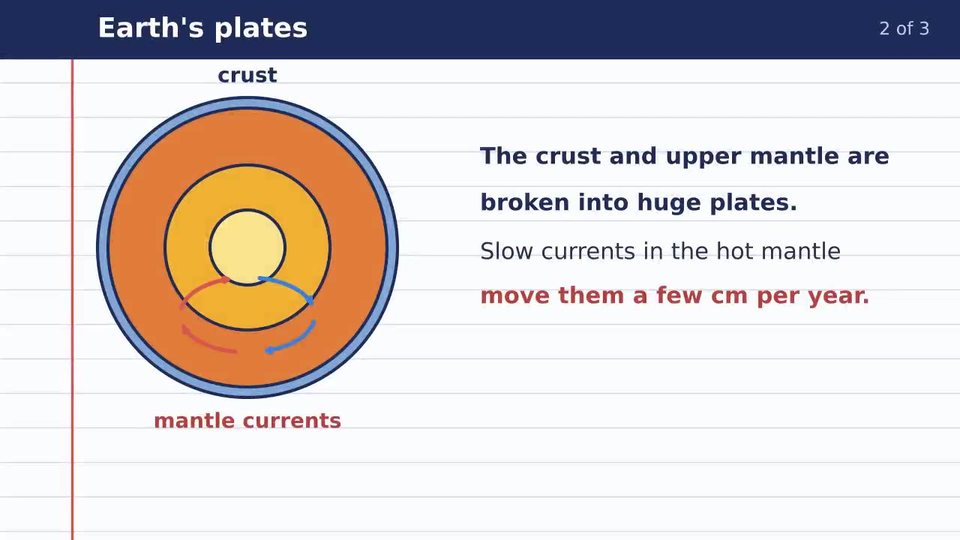
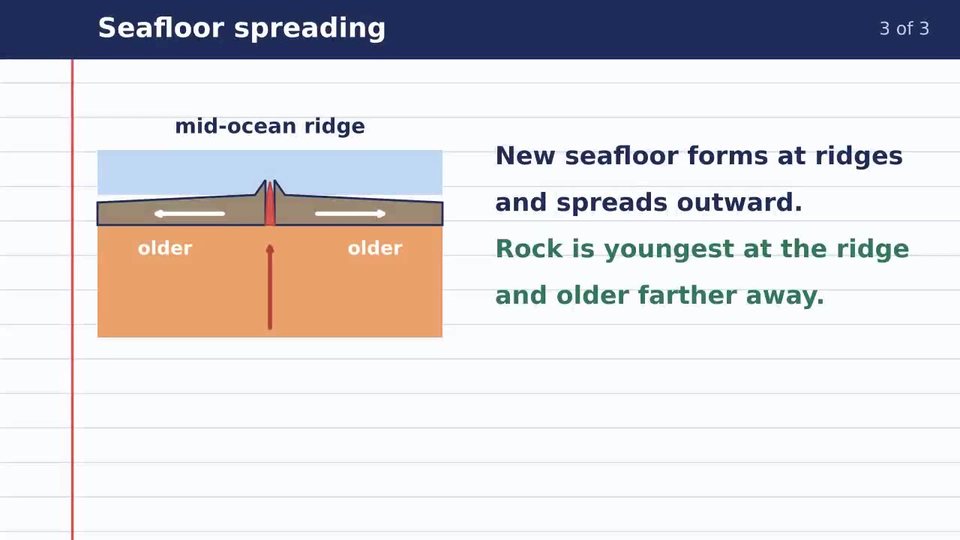
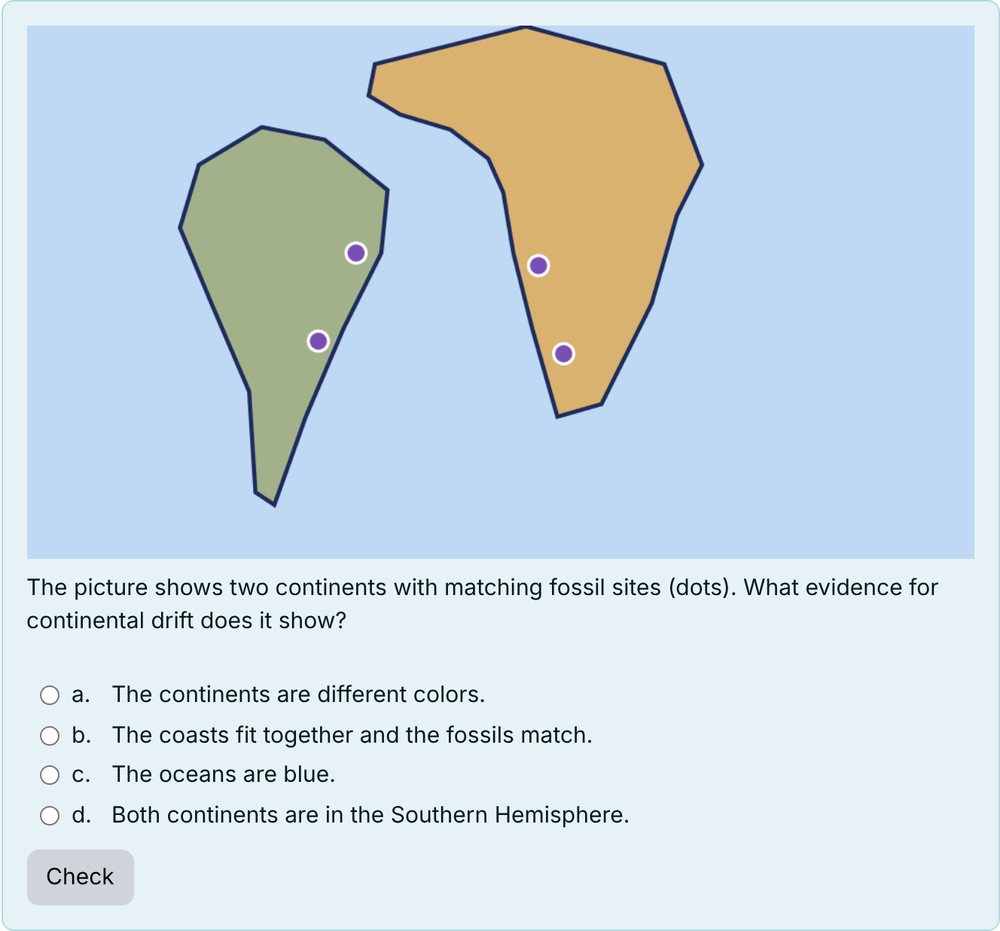
Lesson 8.3: Continental Drift and Plate Tectonics. Students examine Wegener's evidence (matching coastlines and fossils), learn how mantle currents move Earth's plates, and see how seafloor spreading makes the youngest rock at mid-ocean ridges.
Try the full interactive lesson Opens our sample-lessons course. No account needed.
A look at the activities
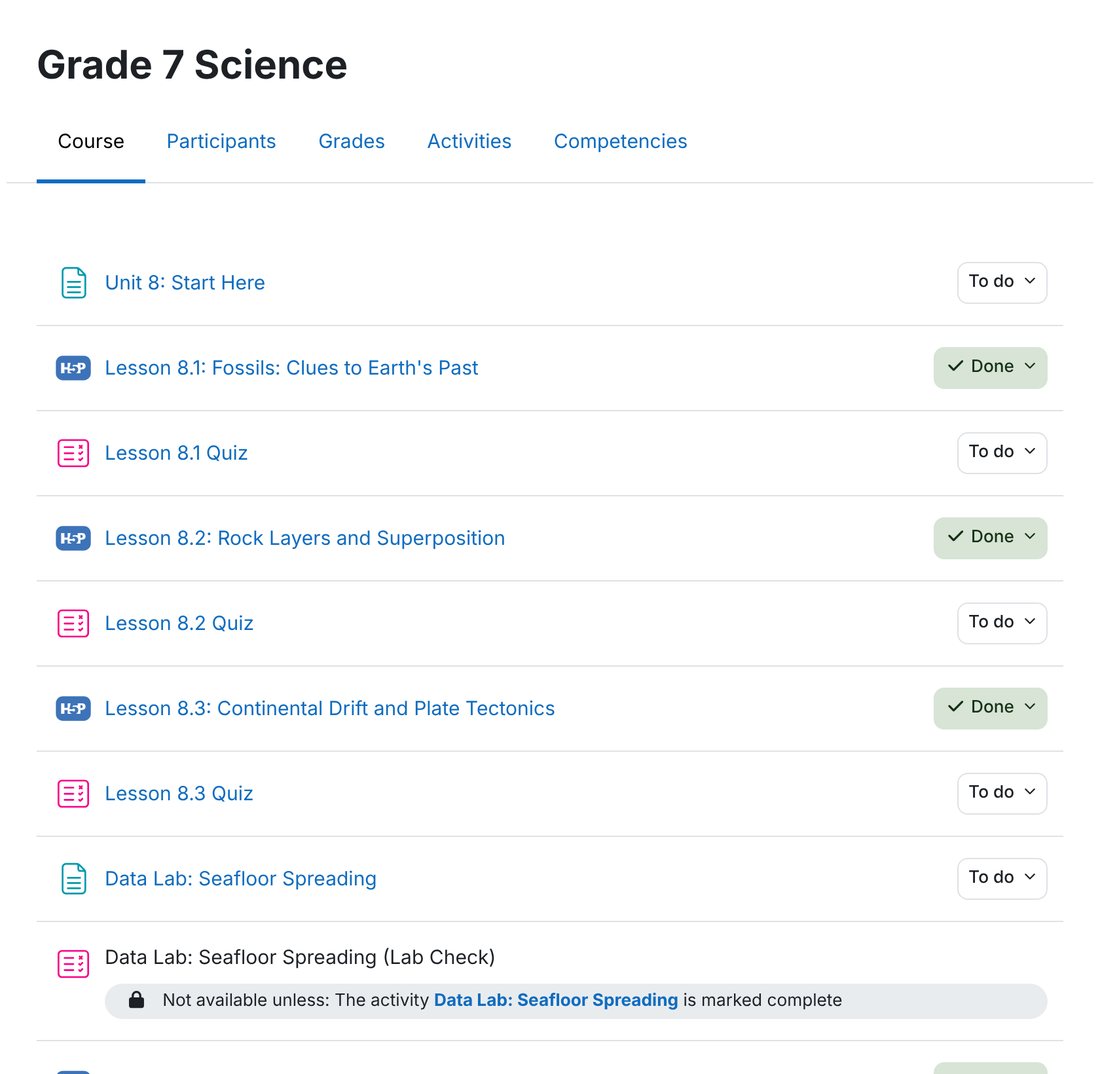
Want this course for your students?
We host it for you with student logins, or deliver it as a backup your own Moodle can restore. We can also adapt it to your school's pacing, standards or language needs.